

Crypto Terms — the hardest part of getting into crypto isn’t even the money… it’s the weird vocabulary.
You open Twitter and see things like:
- “I just aped into this gem”
- “Low cap, strong fundamentals”
- “DeFi yield farming is insane”
And you’re just sitting there like… what does any of this even mean?
I’ve been there. Everyone has.
The good news? Once you understand the key terms, crypto suddenly becomes way less intimidating.
So in this guide, I’ll break down the most important crypto terms in simple English, no complicated definitions, no boring explanations.

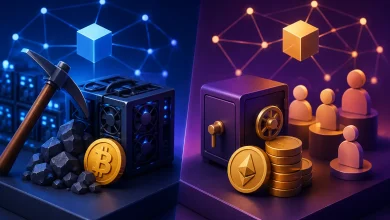
Crypto glossary illustration / blockchain icons]What Is Cryptocurrency?
Let’s start simple.
Cryptocurrency is digital money that runs on blockchain.
No bank controls it.
No government controls it (in most cases).
Examples:
- Bitcoin
- Ethereum
- Solana
Think of it like internet money you control yourself.
What Is Blockchain?
This is the backbone of everything.
Blockchain is a public digital record of transactions.
Instead of one company holding data…
Thousands of computers store it.
That makes it:
- Transparent
- Secure
- Hard to hack
Every transaction gets recorded permanently.
What Is a Wallet?
A crypto wallet is where you store your crypto.
But here’s the twist…
It doesn’t actually store coins.
It stores your access (private keys).
Popular wallets:
- MetaMask
- Trust Wallet
- Phantom
Your wallet = your identity in crypto.
Lose it… you lose everything.

Crypto wallet interface / MetaMask]
Public Key vs Private Key
This one confuses beginners.
Let’s simplify.
- Public key = your wallet address (you can share it)
- Private key = your password (never share it)
If someone gets your private key…
Game over.
What Is a Token?
A token is a digital asset built on a blockchain.
Examples:
- USDT
- UNI
- LINK
Tokens can represent:
- Money
- Voting power
- Access
- Rewards
Not all tokens are the same.
Coin vs Token (Quick Difference)
People mix these up a lot.
- Coin = has its own blockchain (BTC, ETH)
- Token = built on another blockchain
Simple.
What Is DeFi?
You’ve probably heard this already.
DeFi (Decentralized Finance) = financial services without banks.
You can:
- Lend
- Borrow
- Trade
- Earn
All directly from your wallet.
No middleman.
What Is an Airdrop?
This is everyone’s favorite.
An airdrop is when a project gives free tokens to users.
Usually for:
- Early use
- Testing
- Community support
But you must qualify.
Not everyone gets it.
What Is Gas Fee?
Every blockchain transaction costs a fee.
That’s called gas fee.
You pay it to:
- Send tokens
- Swap tokens
- Interact with apps
Fees vary depending on network.
Ethereum = high sometimes
Other chains = cheaper
What Is a Smart Contract?
Sounds technical, but it’s simple.
A smart contract is code that runs automatically.
Example:
- You send crypto
- Contract executes action
- No human involved
It replaces middlemen.
What Is a dApp?
A dApp = decentralized app.
Instead of apps like:
- PayPal
- Bank apps
You use:
- Uniswap
- Aave
- OpenSea
These connect directly to your wallet.
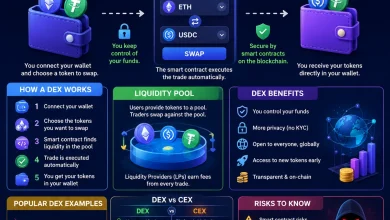
What Is Liquidity?
Liquidity = available money in a system.
In DeFi:
- Users add funds to pools
- Traders use those funds
- Providers earn fees
More liquidity = smoother trading
What Is Staking?
Staking means locking your crypto to earn rewards.
Simple idea:
- Lock tokens
- Earn passive income
It helps secure the network.
What Is Yield Farming?
This is like advanced staking.
You move funds between protocols to maximize profit.
Sounds fun… but risky.
High reward = high risk.
What Is NFT?
NFT = Non-Fungible Token
It represents unique digital items.
Examples:
- Art
- Music
- Game items
Each NFT is different.
Not interchangeable like coins.

NFT artwork / marketplace]
What Is Market Cap?
Market cap shows how big a project is.
Formula:
Price × total supply
Types:
- Low cap → risky, high potential
- Mid cap → balanced
- High cap → stable
What Is Bull Market vs Bear Market?
You’ll hear this a lot.
- Bull market = prices going up
- Bear market = prices going down
Bull = excitement
Bear = fear
Crypto cycles between both.
What Is FOMO?
FOMO = Fear Of Missing Out
When you buy because:
- Everyone else is buying
- Price is going up
Usually leads to bad decisions.
We’ve all done it
What Is HODL?
HODL = Hold your crypto long-term.
Even during crashes.
Originally a typo… now a strategy.
What Is DYOR?
DYOR = Do Your Own Research
Never trust blindly.
Always:
- Research project
- Check team
- Understand risks
Very important.
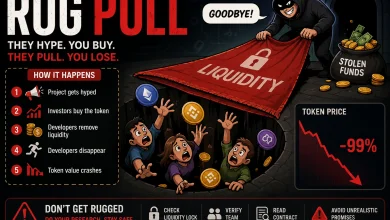
What Is Rug Pull?
This is a scam.
Developers:
- Launch project
- Take users’ money
- Disappear
Happens often in crypto.
Be careful.
What Is Whitelist?
A whitelist gives early access.
Used for:
- NFT mints
- Token sales
- Exclusive launches
Usually requires tasks to join.
What Is DAO?
DAO = Decentralized Autonomous Organization
A community-run project.
No single leader.
Members vote on decisions.
What Is Bridge?
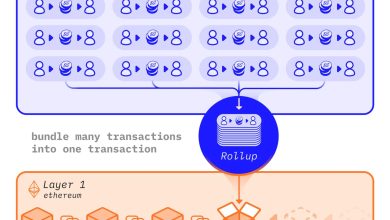
A bridge moves crypto between blockchains.
Example:
- Ethereum → Arbitrum
- BNB → Polygon
Important for multi-chain usage.
What Is Slippage?
Slippage = price change during trade.
If price moves too much…
Transaction may fail.
Or cost more.
What Is TVL?
TVL = Total Value Locked
Total money inside a protocol.
Higher TVL usually means:
- More trust
- More usage
Don’t Let Crypto Terms Scare You
Here’s the truth.
Crypto looks complicated at first because of the language.
But once you understand the basics…
Everything starts to click.
You don’t need to memorize everything today.
Just learn step by step.
And whenever you see a new term, ask:
“What does this actually mean in simple words?”
That mindset alone will take you far.
Because in crypto…
The people who understand win.
And now, you’re already ahead